Easy Traditional Hot Cross Buns Recipe
How to Make Traditional Hot Cross Buns is more than just a recipe; it’s a portal to cherished memories and the sweet, spicy aroma that signifies the arrival of spring. For generations, these delightful spiced cross buns have been a beloved Easter tradition, bringin extractg families together in kitchens worldwide. There’s something undeniably magical about the comforting warmth of a freshly baked hot cross bun, studded with plump raisins and infused with fragrant spices like cinnamon, nutmeg, and cloves. The iconic cross, a symbol of the Easter story, adds a beautiful visual element to these soft, slightly sweet buns. Whether you’re looking to recreate a taste of your childhood or start a new family tradition, learning how to make traditional hot cross buns from scratch is an incredibly rewarding culinary journey. The effort is truly worth it for that first bite into a pillowy bun, bursting with flavor and love.
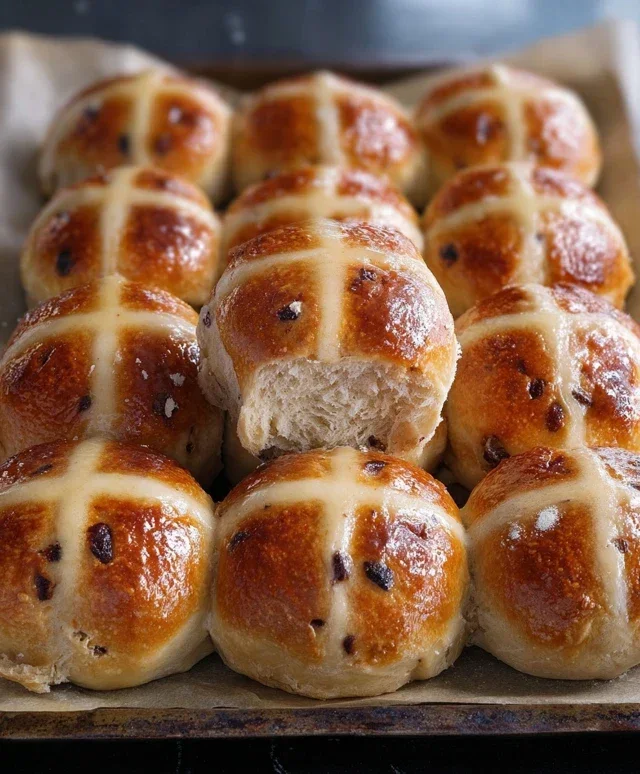
How to Make Traditional Hot Cross Buns
There’s something incredibly comforting about a warm, spiced hot cross bun, especially around Easter. The gentle sweetness, the fragrant spices, and those signature crosses – they’re a culinary hug. Making them from scratch might seem daunting, but I promise you, with a little patience and these detailed instructions, you’ll be pulling perfectly fluffy and delicious hot cross buns out of your oven in no time. Let’s get started on this delightful baking adventure!
Ingredients:
Phase 1: Activating the Yeast and Mixing the Dough
1. Begin extract by creating your yeast mixture. In a large mixing bowl or the bowl of your stand mixer, combine the warmed milk and the instant dried yeast. Add 1 tablespoon of the 4 tablespoons of sugar to this mixture. Give it a gentle stir. Let it sit for about 5-10 minutes. You’ll know the yeast is active when it becomes foamy and bubbly. This is a crucial step to ensure your buns will rise beautifully. If you don’t see any foam, your yeast might be expired or the milk was too hot or too cold, and you’ll need to start again with fresh yeast.
2. Once your yeast is active, add the remaining 3 tablespoons of sugar, the melted butter, and the beaten eggs to the same bowl. Whisk everything together until well combined. Now, it’s time to add the dry ingredients. In a separate bowl, whisk together the 4 cups + 2 tablespoons of all-purpose flour, salt, ground cinnamon, allspice, and ground gin extractger. Gradually add these dry ingredients to the wet ingredients in your mixing bowl.
3. If you are using a stand mixer, attach the dough hook and mix on low speed until a shaggy dough forms. Then, increase the speed to medium and knead for about 8-10 minutes, or until the dough is smooth, elastic, and pulls away from the sides of the bowl. If you are kneading by hand, turn the dough out onto a lightly floured surface and knead for about 10-15 minutes, pushing, folding, and turning until the dough reaches that same smooth, elastic consistency. It should feel soft but not sticky.
Phase 2: First Rise and Incorporating Fruit
4. Lightly grease a clean bowl with a little oil or butter. Place the kneaded dough into the greased bowl, turning it once to coat the entire surface. Cover the bowl tightly with plastic wrap or a clean kitchen towel. Place the bowl in a warm, draft-free spot to rise. This can be on your counter if your kitchen is warm, or in a slightly warmed (then turned off) oven. Let the dough rise for about 1 to 1.5 hours, or until it has doubled in size. This is where the magic happens, as the yeast works its way through the dough, creating air pockets that will make your buns light and fluffy.
5. Once the dough has doubled, gently punch it down to release the air. Turn the dough out onto a lightly floured surface and spread it out slightly. Scatter the dried currants or raisins evenly over the dough. Now, you need to knead them into the dough. Gently fold the dough over the fruit and knead just enough to distribute them evenly. Be careful not to overwork the dough at this stage; you just want the fruit to be incorporated without tearing the dough.
Phase 3: Shaping, Second Rise, and Baking
6. Divide the dough into 12 equal portions. Roll each portion into a ball. You can do this by cupping your hand over the dough on your work surface and rotating it to create a smooth ball. Arrange the dough balls on a baking sheet lined with parchment paper, leaving about 2 inches (5 cm) between them as they will expand. Cover the buns loosely with plastic wrap or a clean kitchen towel and let them rise for another 30-45 minutes, or until they are visibly puffed up and nearly touching each other. While they are rising, preheat your oven to 375°F (190°C).
7. Now for the iconic crosses. In a small bowl, whisk together the ⅓ cup of all-purpose flour, 2 tablespoons of sugar, and just enough warm water (about 2-3 tablespoons, adding it gradually) to create a smooth, thick paste. It should be a consistency that you can pipe or spoon into thin lines. Transfer this paste to a piping bag with a small round tip, or simply use a spoon. Carefully pipe or drizzle the paste onto the top of each risen bun in a cross shape. Don’t worry if they aren’t perfect; a little rustic charm is part of the appeal!
8. Bake the hot cross buns in the preheated oven for 15-20 minutes, or until they are golden brown on top and sound hollow when tapped on the bottom. Keep an eye on them to prevent them from burning.
Phase 4: The Finishing Touches
9. While the buns are still warm from the oven, prepare a simple glaze. In a small bowl, whisk together the 2 tablespoons of powdered/confectioners sugar with about 1-2 teaspoons of warm water until you have a smooth, pourable glaze. You want it thick enough to coat but thin enough to drizzle. Brush this glaze over the warm buns. The heat from the buns will help the glaze melt and create a lovely sheen.
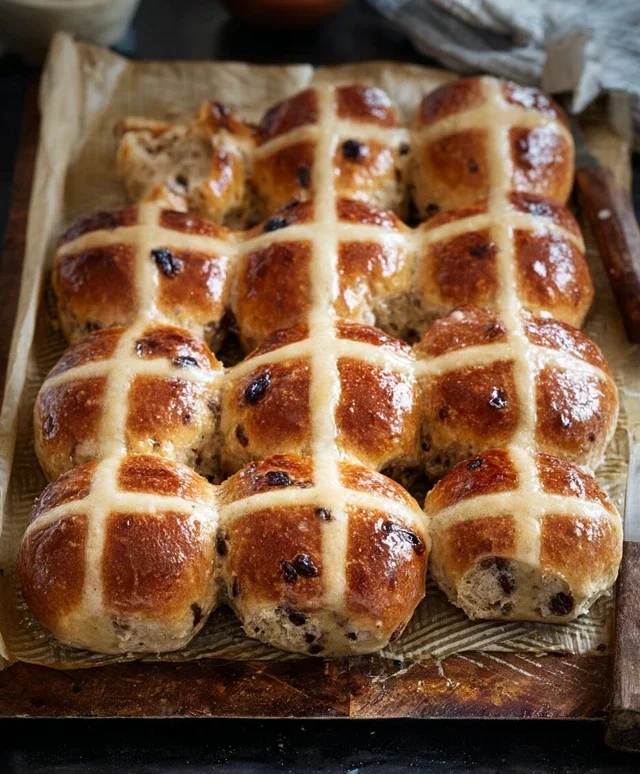
Let your traditional hot cross buns cool slightly on a wire rack before enjoying them. They are best served warm, perhaps with a generous spread of butter. The aroma filling your kitchen as they bake is truly non-intoxicating, and the taste of these homemade beauties is so much more rewarding than any store-bought version. Enjoy every bite!
Conclusion:
There you have it! Making traditional hot cross buns from scratch is a truly rewarding experience, filling your home with an irresistible aroma and delivering a delightful taste of this cherished Easter treat. The beauty of this recipe lies in its ability to create buns that are both wonderfully soft and subtly spiced, perfectly studded with plump dried fruits. They offer a comforting sweetness that’s balanced by the warming spices. These aren’t just any buns; they’re a delicious centerpiece for your Easter celebrations or a fantastic treat any time of year.
Serve your freshly baked hot cross buns warm, split and slathered with butter. They are also divine with a drizzle of honey or a smear of clotted cream. For variations, don’t hesitate to experiment! You could add a handful of chopped candied peel for an extra citrusy kick, or a pinch of cardamom for a more complex spice profile. Some even like to incorporate a splash of rum extract or brandy extract into the dough for added depth. I truly encourage you to give this traditional hot cross bun recipe a try. You might be surprised at how achievable and satisfying homemade baking can be!
Frequently Asked Questions:
Why are my hot cross buns not rising well?
Several factors can affect rising. Ensure your yeast is fresh and activated correctly. The dough also needs a warm, draft-free place to prove. Over-kneading can also make the gluten too tight, hindering expansion. Be patient with the proofing times; they can vary depending on your kitchen temperature.
Can I make hot cross buns ahead of time?
Absolutely! You can bake the buns and store them in an airtight container at room temperature for up to 2 days. For longer storage, they freeze beautifully. Once completely cooled, wrap them tightly in plastic wrap and then in foil. Reheat them gently in a low oven or microwave before serving.
Traditional Hot Cross Buns
Learn how to make classic, spiced hot cross buns with plump dried fruit and a sweet glaze. A delightful Easter treat or anytime indulgence.
Ingredients
-
1 cup (236 ml milk) warmed to 100– 115 °F (38 – 46°C)
-
2 teaspoons instant dried yeast
-
4 tablespoons sugar
-
4 cups + 2 tablespoons (525 grams) all-purpose/plain flour
-
1 teaspoon salt
-
1 teaspoon ground cinnamon
-
1 teaspoon allspice
-
¼ teaspoon ground ginger
-
1 cup (150 grams) dried currants or raisins
-
6 tablespoons unsalted butter (melted)
-
2 large eggs beaten (room temperature)
-
⅓ cup (46 grams) all-purpose/plain flour
-
2 tablespoons sugar
-
Warm water
-
2 tablespoons powdered/confectioners sugar
Instructions
-
Step 1
In a large bowl, combine the warm milk, yeast, and 2 tablespoons of the sugar. Let stand for 5-10 minutes until foamy. -
Step 2
Add the 4 cups + 2 tablespoons flour, salt, cinnamon, allspice, ginger, dried currants/raisins, melted butter, and beaten eggs to the yeast mixture. Mix until a shaggy dough forms. -
Step 3
Turn the dough out onto a lightly floured surface and knead for 8-10 minutes until smooth and elastic. Place in a greased bowl, cover, and let rise in a warm place for 1-1.5 hours, or until doubled in size. -
Step 4
Punch down the dough and divide it into 12 equal portions. Shape each portion into a round bun and place them on a parchment-lined baking sheet, leaving a little space between them. Cover and let rise for another 30-45 minutes. -
Step 5
Preheat oven to 375°F (190°C). Mix the remaining ⅓ cup flour and 2 tablespoons sugar with enough warm water to create a smooth, thick paste. Spoon this into a piping bag or a sturdy plastic bag with a corner snipped off. -
Step 6
Bake the buns for 15-20 minutes, or until golden brown. While still warm, brush the tops with a simple glaze made from the powdered sugar and a little water.
Important Information
Nutrition Facts (Per Serving)
It is important to consider this information as approximate and not to use it as definitive health advice.
Allergy Information
Please check ingredients for potential allergens and consult a health professional if in doubt.