Homemade Pâtes de Fruits – No Corn Syrup Recipe
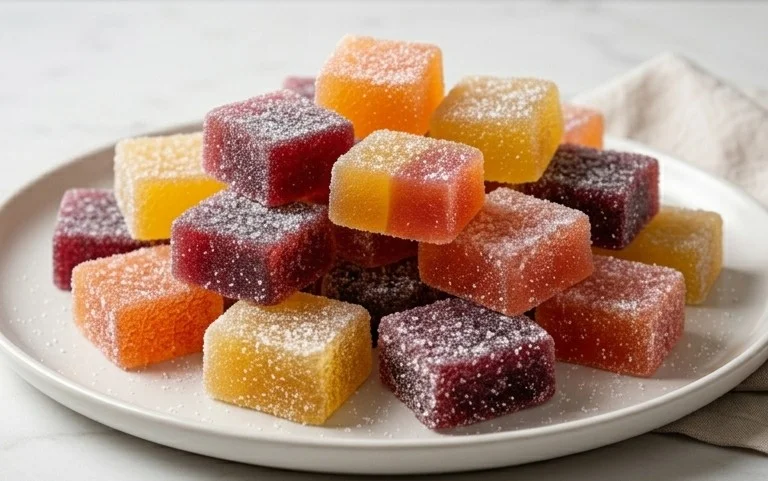
Homemade pâtes de fruits are a delightful journey into pure, unadulterated fruit flavor. Forget those overly sweet, artificial-tasting candies you might find in stores; we’re talking about vibrant, jewel-toned cubes bursting with the essence of ripe fruit, all crafted right in your own kitchen. The magic of truly homemade pâtes de fruits lies in their simplicity and the incredible intensity of flavor they achieve. What makes these particularly special, and what I absolutely adore about this recipe, is that we’re achieving that perfect chewy texture and brilliant taste without a drop of corn syrup. This means you can savor every fruity bite, knowing you’re indulgin extractg in something natural, pure, and utterly delicious. Get ready to impress yourself and your loved ones with these exquisite, homemade pâtes de fruits!
Homemade Pâtes de Fruits (No Corn Syrup)
There’s something incredibly satisfying about creating these vibrant, jewel-like candies at home. Pâtes de fruits, often called fruit jellies, are a delightful treat, bursting with pure fruit flavor. The beauty of making them yourself is that you can control the ingredients, avoiding the often-used corn syrup and opting for a cleaner, more natural sweetness. These little squares of fruity goodness are surprisingly simple to make with just a few key ingredients. They’re perfect for gifting, for adding a touch of elegance to your dessert table, or simply for enjoying as a special indulgence.
Ingredients:
*A note on pectin: For these pâtes de fruits, you’ll want to use what’s often called “classic” or “traditional” pectin, not the low-sugar or no-sugar-needed varieties. This type of pectin requires sugar and acid (which we get from the fruit juice and lemon juice) to activate its gelling properties effectively. You can usually find it in the canning section of your grocery store or at specialty baking supply shops.
Crafting Your Fruit Jellies
Now, let’s get down to the delicious process of transforming simple ingredients into exquisite pâtes de fruits. Patience and a good thermometer are your best friends here!
1. Prepare Your Fruit Juice Base: Start by measuring out your 2 cups of fruit juice. For this recipe, we chose a delightful blend of sweet orange juice and tart pomegranate juice. The combination offers a beautiful balance of flavors and a stunning jewel-toned hue. If you’re using store-bought juice, ensure it’s 100% juice with no added sugars or thickeners, as this can interfere with the pectin’s setting ability. You can also use freshly squeezed juice from your favorite fruits – just be mindful of the natural sugar content, which might require slight adjustments to the added sugar, though for this recipe, the ratio is quite forgiving. Pour your chosen fruit juice into a medium-sized, heavy-bottomed saucepan. A heavy-bottomed pot is crucial for even heating and preventing scorching.
2. Combine Pectin and Sugar: In a separate, dry bowl, thoroughly whisk together the 1 cup of granulated sugar and the 3 tablespoons of classic pectin. This step is vital for ensuring the pectin disperses evenly throughout the sugar, preventing clumps and guaranteeing a smooth, consistent set in your pâtes de fruits. If the pectin isn’t properly incorporated into the sugar beforehand, you might end up with pockets of unset jelly or a gritty texture. Take your time with this whisking to make sure every crystal of sugar is coated with pectin. Once thoroughly mixed, set this sugar-pectin mixture aside.
3. Heating the Fruit Juice and Adding the Sugar Mixture: Place the saucepan containing your fruit juice over medium heat. Stir the juice gently as it begin extracts to warm up. We don’t want it boiling at this stage. Once the juice is warm but not yet simmering, slowly begin extract to whisk in the sugar-pectin mixture. Add it gradually, a little at a time, while continuously whisking. This slow addition helps to further ensure the pectin dissolves smoothly and doesn’t clump. Continue whisking constantly until all of the sugar-pectin mixture has been incorporated and the liquid appears homogenous.
4. Boiling to Set and Adding Lemon Juice: Now, increase the heat slightly to bring the mixture to a rolling boil. A rolling boil is a boil that cannot be stirred down. It’s essential for activating the pectin. Once it reaches this stage, continue to boil, stirring constantly, for precisely 1 minute. This precise timing is critical for the pectin to do its job. After the 1 minute of boiling, remove the saucepan from the heat. Now, stir in the 1 tablespoon of freshly squeezed lemon juice. The lemon juice not only adds a touch of brightness and cuts through the sweetness but also contributes to the acidity needed for the pectin to gel effectively. Stir well to incorporate.
5. Testing for Set and Pouring: It’s time to check if your jelly mixture is ready to set. You can do this with a candy thermometer. Aim for a temperature of around 220°F (104°C). If you don’t have a thermometer, you can perform the “wrinkle test”: place a small plate in the freezer before you start cooking. Once you’ve boiled for the minute, spoon a tiny bit of the hot mixture onto the cold plate. Wait about 30 seconds to a minute. If the surface wrinkles when you push it with your finger, it’s ready. If it’s still liquid, return the mixture to a boil for another minute and test again. Once you’ve confirmed it will set, carefully and quickly pour the hot liquid into your prepared baking dish. A shallow square or rectangular dish (about 8×8 inches or similar) lined with parchment paper works best. Ensure the parchment paper overhangs the edges to make lifting easier. Work relatively quickly, as the mixture will start to set as it cools.
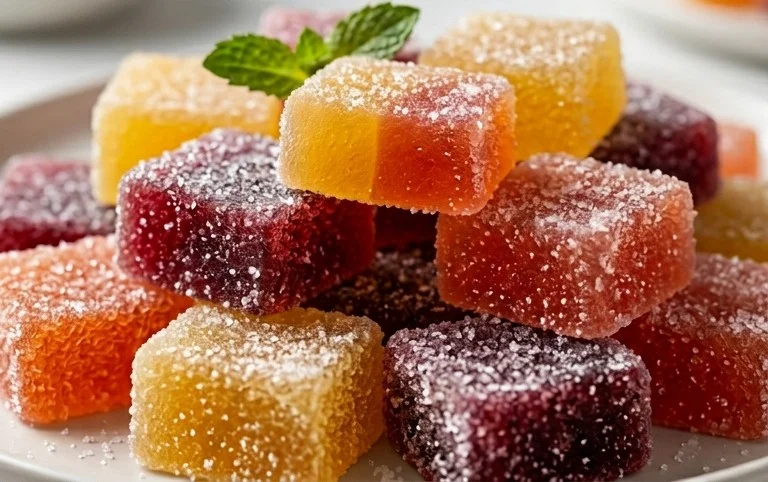
6. Cooling and Cutting: Let the poured mixture cool at room temperature for about 30 minutes. Then, transfer it to the refrigerator and chill for at least 2-3 hours, or until it is completely firm and set. Once firm, use the overhangin extractg parchment paper to lift the entire slab of jelly out of the dish onto a cutting board. Lightly dust your knife or a pizza cutter with granulated sugar. Cut the jelly into small, bite-sized squares, about 1 inch by 1 inch. As you cut each piece, toss it in more granulated sugar to coat all sides. This sugary coating prevents them from sticking together and gives them that classic pâte de fruits appearance. Store your finished pâtes de fruits in an airtight container at room temperature, layered between parchment paper, for up to two weeks. Enjoy the taste of pure fruit!
Conclusion:
You’ve now unlocked the secret to creating delightful, homemade pâtes de fruits without the need for corn syrup! This recipe is fantastic because it relies on the natural sugars of fruit and a simple sugar syrup, resulting in intensely flavored, perfectly chewy confections that are both healthier and more authentic. The vibrant colors and pure fruit taste are truly a testament to simple ingredients done right. Imagin extracte gifting these beautiful, homemade pâtes de fruits – they’re sure to impress! They are wonderful served after a meal as a sophisticated sweet treat, alongside a cheese board for a touch of fruity sweetness, or even as a colorful addition to a dessert platter.
Don’t be afraid to experiment with different fruits! While berries and stone fruits are classics, consider tropical options like mango or passionfruit, or even more unusual choices like kiwi or lychee. The possibilities for delicious variations are endless, allowing you to tailor these homemade pâtes de fruits to your personal preferences. So, gather your favorite fruits, embrace the process, and get ready to enjoy the incredibly rewarding experience of making these exquisite fruit jellies from scratch. I truly encourage you to give this recipe a try – you might be surprised at how easy and satisfying it is!
Frequently Asked Questions:
Q: How long do homemade pâtes de fruits last?
A: Stored properly in an airtight container at room temperature, your homemade pâtes de fruits should stay fresh for about 1 to 2 weeks. For longer storage, you can refrigerate them, though this might slightly alter their texture. Ensure they are fully cooled before storing.
Q: My pâtes de fruits are too soft or too hard. How can I adjust the texture?
A: Texture is often a matter of cooking temperature. If they are too soft, it typically means they didn’t reach a high enough final temperature (aim for 230-240°F or 110-115°C). If they are too hard, they may have been cooked a little too high or for too long. Next time, be precise with your thermometer and adjust the cooking time accordingly.
Q: Can I use different types of pectin?
A: This recipe is specifically designed for a certain type of pectin (often referred to as a quick-set or high-methoxyl pectin). Substituting with other pectins, like low-methoxyl, might require different ratios of sugar and acid, and could affect the final texture. It’s best to stick to the recommended pectin for consistent results.
Homemade Pâtes de Fruits (no corn syrup)
A delicious and naturally sweetened fruit jelly candy, perfect for a homemade treat.
Ingredients
-
2 cups fruit juice (orange and pomegranate)
-
1 cup granulated sugar, plus more for coating
-
3 tablespoons classic pectin
-
1 tablespoon freshly squeezed lemon juice
-
Pinch of salt
Instructions
-
Step 1
In a medium saucepan, combine the fruit juice, granulated sugar, and lemon juice. -
Step 2
In a small bowl, whisk together the pectin with a tablespoon of the sugar mixture to prevent clumping. -
Step 3
Add the pectin mixture to the saucepan and stir until fully incorporated. -
Step 4
Cook over medium heat, stirring constantly, until the mixture comes to a rolling boil and thickens, about 5-7 minutes. -
Step 5
Pour the hot mixture into a lightly greased 8×8 inch baking pan or individual candy molds. -
Step 6
Let it set at room temperature for at least 4 hours, or until firm. -
Step 7
Cut into desired shapes and toss in granulated sugar to coat.
Important Information
Nutrition Facts (Per Serving)
It is important to consider this information as approximate and not to use it as definitive health advice.
Allergy Information
Please check ingredients for potential allergens and consult a health professional if in doubt.